Yale School of Management
Apply MBA
Visit
Give
Recruit & Hire
View News & Events
Contact

Psychologist Karen Wynn Discusses the Origins of Human Morality

Posted on: January 30, 2012

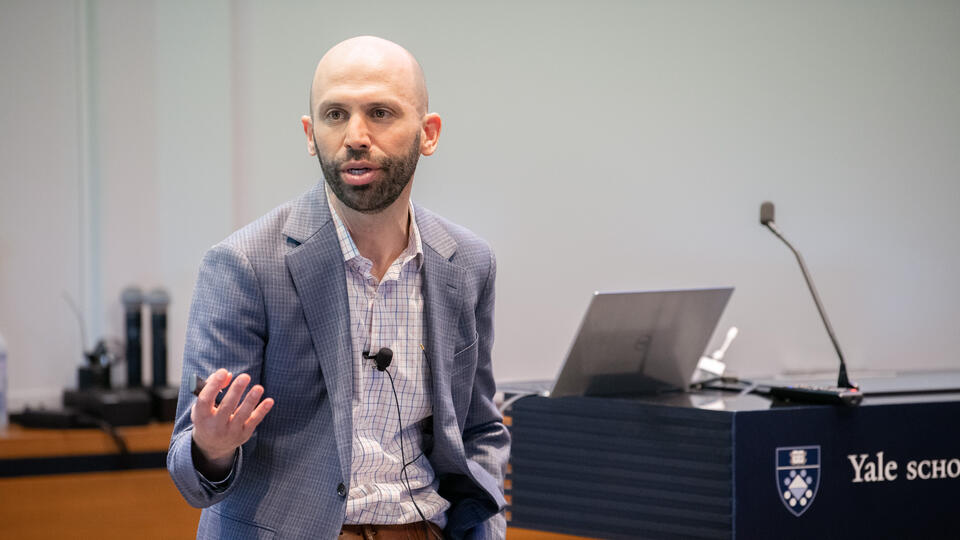
Twenty years ago, Karen Wynn, professor of psychology, set out to understand how babies think, or, as she titled a recent lecture at Yale SOM, "The Search for the Origins of Human Good and Evil."

"It's a little bit grandiose," she said.

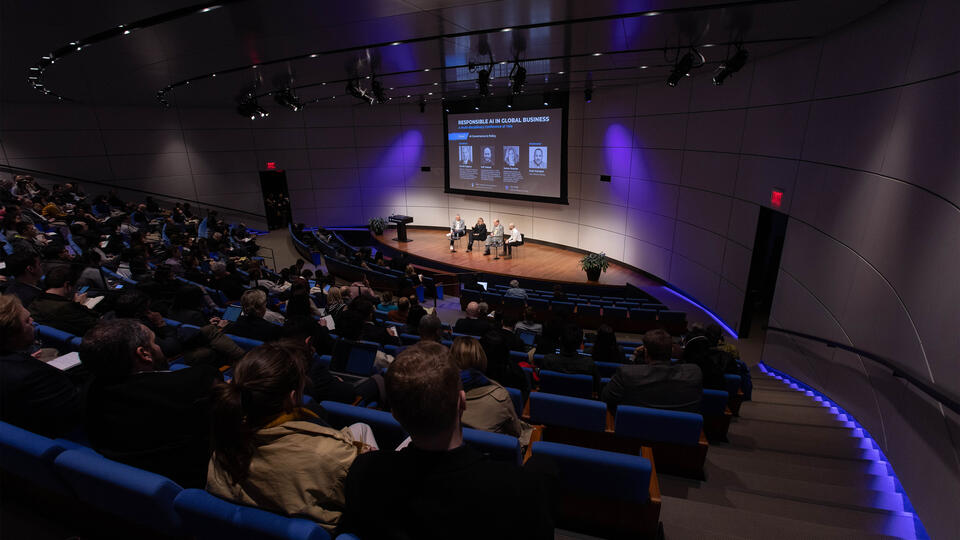
Wynn spoke on January 12 as part of Convening Yale, a series of seminars that brings faculty from around the university to Yale SOM to discuss their research. Previous guests include Ramamurti Shankar, the John Randolph Huffman Professor of Physics; Marvin Chun, professor of psychology; and Charles Hill, Brady-Johnson Distinguished Fellow in Grand Strategy and senior lecturer in humanities. The series is organized by Shyam Sunder, the James L. Frank Professor of Accounting, Economics, and Finance, and Martijn Cremers, associate professor of finance, with the intention of helping Yale SOM students stretch their thinking about complex management and leadership problems.

Wynn walked the audience through some of the findings that she and other researchers have made about how infants and toddlers perceive the world—information, she said, that can help adults understand their own reactions to events around them.

Humans, she said, are born with an ability to perceive and make sense of the world, and they evaluate the actions of others from very early in life. Wynn and her teammates created experiments that used the tools young children have—looking and reaching—in order to evaluate their reactions to certain stimuli.

In one experiment, a puppet tries to open a box. Another puppet helps the first one, while a third hinders it. Researchers then presented both the helping and hindering puppets to infants and toddlers, and measured their response. Babies looked at the helping puppet longer, while toddlers reached for it. "It doesn't matter what age or what scenario," Wynn said. "A strong majority prefers the 'pro-social' character."

As the experiments became more sophisticated, similar responses were seen. Things began to change when a new dimension is added to the mix. Children were asked to respond to two foods. The puppets then choose between the two foods. Experiments found that the children identify with the puppet that likes the same food as them, which then influences how they view the hinder/helper experiments. Babies and infants were far more likely to approve of the similar puppets being helped, while having the same positive reaction when the puppets that chose different foods were hindered. This reaction seems to suggest the roots of the adult impulses toward xenophobia, prejudice, and war—the "evil" part of Wynn's lecture title.

"It doesn't make sense but it seems like we've got machinery inside us that says, 'Go with the similar,'" she said. "Among humans, it seems any similarity will do."